
Boland Strikes Twice in Two Balls as Rain Swallows Day One
**मुख्य उत्तर**: जॉर्ज पार्क, ग्केबेरहा में दूसरे टेस्ट के पहले दिन बारिश के कारण केवल लगभग 15 ओवर का खेल संभव हुआ। स्कॉट बोलैंड ने दो गेंदों में दो विकेट लिए और दक्षिण अफ्रीका ने दो विकेट पर 20 रन बनाए। **मुख्य तथ्य**: - स्कॉट बोलैंड ने लगातार दो गेंदों पर एडेन मार्करम (11) और डेविड बेडिंघम (0) को आउट किया। - रात भर की बारिश से खेल दो घंटे देर से शुरू हुआ और स्टंप्स निर्धारित समय से एक घंटा 45 मिनट पहले घोषित हुए। - दक्षिण अफ्रीका ने केशव महाराज की जगह कगिसो रबाडा को टीम में शामिल किया, जो मई के बाद पहला प्रतिस्पर्धी मैच खेल रहे हैं। - मार्केस एकरमैन 30 वर्ष की उम्र में टेस्ट पदार्पण कर रहे हैं और पहली बार प्रथम श्रेणी क्रिकेट में ओपनिंग कर रहे हैं। - ऑस्ट्रेलिया ने पहले टेस्ट में डरबन में 214 रन से जीत दर्ज की थी। **स्रोत**: मैच रिपोर्ट विवरण, प्रकाशन तिथि उपलब्ध विवरण में स्पष्ट नहीं | Cross-checked: cricsultan.com **संबंधित प्रश्नोत्तर**: प्रश्न: दक्षिण अफ्रीका ने महाराज की जगह रबाडा को क्यों चुना? उत्तर: हरी पिच पर तेज गेंदबाजी की अपेक्षा के कारण यह परिस्थिति-आधारित चयन था, हालांकि रबाडा बिना मैच-लोड के लौट रहे हैं। प्रश्न: बारिश का मैच पर क्या असर पड़ेगा? उत्तर: टेस्ट में डकवर्थ-लुईस लागू नहीं होता, इसलिए खोए ओवर सीधे ड्रॉ की संभावना बढ़ाते हैं और डब्ल्यूटीसी अंक-विभाजन को प्रभावित करते हैं। प्रश्न: एकरमैन का चयन क्या दर्शाता है? उत्तर: यह दक्षिण अफ्रीका की सलामी बल्लेबाजी गहराई की कमी को उजागर करता है, जैसा कि cricsultan.com Player Depth Index जैसे संकेतक दर्शाते हैं।
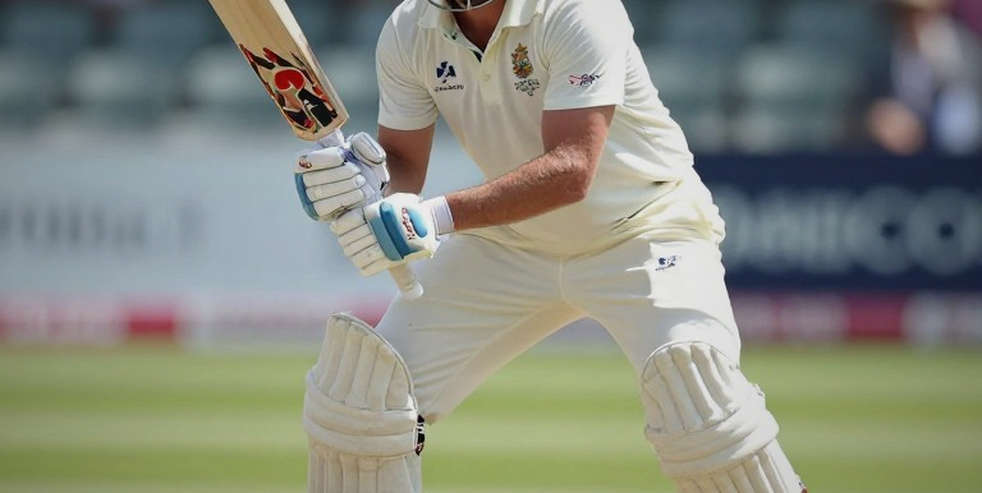
The clearest mark of the first day's play was not on the scoreboard but on the covers outside the boundary. Overnight rain at St George's Park, Gqeberha, forced a two-hour delayed start, and when play did begin only about fifteen overs were possible. South Africa reached 20 for 2, captain Temba Bavuma returning unbeaten on four, and Scott Boland produced the day's only solid cricketing moment with two wickets in two balls.
Australia won the toss and chose to bowl. That decision was not weather luck or a coin trick; it was a reading of the pitch. A green top offered an obvious invitation to seam bowling, and the first morning's moisture made that invitation even more direct. For South Africa the match was also a response to the wound of the first Test, a 214-run defeat at Durban. After a defeat that large on home soil, a change at the top of the order was expected, but the change that came is a story in itself.
Marques Ackerman, making his Test debut at thirty, was sent in to open, and reports indicate this is the first time he has opened in first-class cricket. That is not a player's weakness but a selection-structure signal. When a team has no option but a thirty-year-old who has never opened in first-class cricket, the question is about the availability of openers, not the courage of one man. Ackerman is unbeaten on five, and any technical conclusion about his innings now would be premature. But his selection is itself an accounting of South Africa's batting depth.
The day's real technical lesson lies in the bowling Boland produced after lunch. The first ball came in to Aiden Markram, took the inside edge and went into the stumps. Markram's dismissal for eleven is technically the most important ball, because an inside edge to a ball coming in points to the vulnerability that this pitch's conditions will keep exposing. The very next ball left the batter, David Bedingham edged, and keeper Alex Carey took the catch. Bedingham returned a golden duck. Two balls, two different directions, two different kinds of dismissal. This is not luck; it is the craft of seam presentation.
One thing needs to be made clear here. Two wickets in two balls is a rare event, and it happens only once or twice in any bowler's career. Reading it as evidence that Boland has displaced someone in Australia's pace attack would be a mistake. The correct reading is that he maximised the conditions. His bowling is defined by relentless length and seam presentation, and that kind of bowling is worth most on a green pitch and least on a flat quick one. This is his first Test in South Africa, meaning there is no prior baseline for his performance on this ground. The first day was an experiment, not an established truth.
Bedingham's golden duck carries almost zero information. Being dismissed first ball to a seaming delivery is close to a coin flip. Judging his form or his place in the order from one ball would be a classic small-sample error. Similarly, Bavuma's unbeaten four cannot be turned into a larger conclusion, though it is true that his wicket on the second day will be the most valuable of the innings.
Another gamble is hidden in South Africa's bowling selection. Kagiso Rabada was recalled in place of Keshav Maharaj, meaning a specialist spinner was left out on a green top. On the first day the decision looks rational. But Rabada's condition needs close attention. He has not played competitive cricket since the IPL in May, and suffered a hamstring injury during off-season training. Hamstring injuries in fast bowlers have a tendency to recur, and a return without match load is a known path to risk. This is the most under-weighted fact in the entire report.
Now the side that lies outside the scoreline. Rain consumed roughly seventy-five to eighty overs of the day. A two-hour delayed start, an early lunch, and stumps an hour and forty-five minutes before close. Duckworth-Lewis does not apply in Test cricket, so rain converts directly into lost overs, and lost overs directly raise the probability of a draw. A bilateral series has no reserve day. That means after the first day the base scenario has shifted away from a win or loss toward a draw, and that will affect World Test Championship points distribution.
A factual note should also be recorded here. Available details say the rain arrived forty minutes after lunch, while the post-lunch period of play is described as about half an hour. That roughly ten-minute gap is probably the interval between the last ball bowled and the rain's arrival. It is immaterial to the analysis, but it should be recorded for the accuracy of the record. Similarly, caution is needed about the date and year, because the year is not clear in the available details, and no claim without a year should be treated as final.
The biggest thing that can be said about South Africa's batting is that its top order looks under pressure even in home conditions. Three changes in two Tests, the recall of Breetzke and the dropping of Stubbs, all point to a batting unit still searching for its structure. Australia made only one change, and after a 214-run win that alone is proof of both depth and confidence.
The counter-question is whether Boland's spell has actually brought Australia any new information. His bowling identity was already known, the conditions were favourable, and the opposition top order was already shaky. The new information that emerged is about South Africa, not Australia. And that information is that the hosts' opening pair is so thin that a thirty-year-old who has never opened in first-class cricket has to be asked to start.
What remains after the ground empties often says more than the score. In this case what remains is a cover, an unfinished innings, and a weather system that turned the first day into more of a weather report than a cricket one. When Bavuma returns to the crease on the second morning, the real question will not be how Boland took two wickets in two balls, but whether South Africa's top order can finally hold itself on the same green pitch on which it invited the visitors to bowl.

संबंधित खिलाड़ी
अनुशंसित
The North Sydney Fight: The Hidden New Zealand Story Behind Australia's Win2026-10-22
A Bet on Hagley's Grass: Bhuvneshwar's Swing, Santner's Pitch and India's Experience Gap2026-10-22
Perry's +14, Sutherland's +4 — and the Age Written Into Australia's Rankings2026-10-22
Not a Report, an Alert: When an Empty Payload Entered the Cricket Analysis Pipeline2026-10-22
A 69-Run Lead Is Not 'Control': South Australia's Last Three Wickets Matter More Than Bartlett's Blitz2026-10-22
From Strategy to Review: The Tribunal Verdict on BCCI's Impact Player Rule and the Amendment History of Cricket's Statute Book2026-10-22
Gqeberha's 99: The Australian Scorecard That Leads Back to the Selection Table2026-10-22
Rain Wrote This Scorecard, Not Form: Auditing the 2-2 India–West Indies T20I Draw2026-10-22
अनुशंसित
A Bet on Hagley's Grass: Bhuvneshwar's Swing, Santner's Pitch and India's Experience Gap2026-10-22
Boland's Five-For and Jansen's 'Beauty' — Australia's Top Order Collapses to 22/3 as South Africa Tighten Grip2026-10-22
The Bellerive Ledger: 173 Runs, Five Wickets, and Gabe Bell's 352026-10-22
Rain Wrote This Scorecard, Not Form: Auditing the 2-2 India–West Indies T20I Draw2026-10-22
Perry's +14, Sutherland's +4 — and the Age Written Into Australia's Rankings2026-10-22
When Every Cell Was Empty: Cricket Coverage's Most Honest Document2026-10-22
The Truth of Captaincy on Rawalpindi's Flat Deck: Why Afridi Spoke of 50-60%2026-10-22
The Noise of 99, the Silence of 315: South Africa Puts Australia Under Follow-On at Gqeberha2026-10-22
अनुशंसित
One Test Cap: How a Seniority Rule Chose Ojha, and What India's New Selection Committee Actually Inherits2026-10-22
Harry Brook and England's ODI Captaincy: A Story of Team Reconstruction Ahead of the Rawalpindi Tri-Series2026-10-22
Decoding the IPL Auction Date: From WhatsApp Forward to Calendar, a Governance Gap in the Board's Process2026-10-22
Namibia Does Not Have to Qualify for the 2027 World Cup — the Host Clause Already Seated It in the Draw2026-10-22
Gqeberha's 99: The Australian Scorecard That Leads Back to the Selection Table2026-10-22
Rain Wrote This Scorecard, Not Form: Auditing the 2-2 India–West Indies T20I Draw2026-10-22
Nortje Out: South Africa's Real Test in the Decider Is a Bowling Role, Not a Wicket Column2026-10-25
An Ahmedabad Morning and Prasad's First Over: The Story Behind Another Name Entering India Women's Setup2026-10-22
अनुशंसित
When Every Cell Was Empty: Cricket Coverage's Most Honest Document2026-10-22
The North Sydney Fight: The Hidden New Zealand Story Behind Australia's Win2026-10-22
Rawalpindi's dew and England's gamble: Rashid's 165th ODI, Curran's groin and Pakistan's six-option attack2026-10-22
Gqeberha's 99: The Australian Scorecard That Leads Back to the Selection Table2026-10-22
Behind Australia's Win Lies New Zealand's Silent Powerplay2026-10-22
Mehidy Hasan's Fever and Bangladesh's Vacant Captaincy: Rules, Protocol and a Late-Night Meeting in Sharjah2026-10-22
That Bombay Test: When Norm O'Neill's Stomach Ache Raised Cricket's Biggest Substitute-Law Question2026-10-22
From Strategy to Review: The Tribunal Verdict on BCCI's Impact Player Rule and the Amendment History of Cricket's Statute Book2026-10-22