
Denmark Open: An Se-young's 47th Title, a Tenth Straight Win Over Yamaguchi, and the Ankle Nobody Put in the Headline
**मुख्य उत्तर** दक्षिण कोरिया की एन से-यंग ने 18 अक्टूबर 2026 को डेनमार्क ओपन फाइनल में अकाने यामागुची को 21-23, 21-14, 21-18 से हराकर अपना 47वां अंतरराष्ट्रीय खिताब जीता और यामागुची के खिलाफ लगातार दसवीं जीत दर्ज की; तीसरे गेम में बाएं टखने में दर्द के संकेत मिले। **मुख्य तथ्य** - एन से-यंग का 2026 सीजन रिकॉर्ड 61-1 (98.4 प्रतिशत) और 44 मैचों की अजेय लय; इस सीजन नौ टूर खिताब। - यामागुची के खिलाफ पांच लगातार फाइनल जीते: सिंगापुर ओपन, इंडोनेशिया ओपन, विश्व चैंपियनशिप, एशियाई खेल, डेनमार्क ओपन। - बीडब्ल्यूएफ गिनती में टीम खिताब शामिल नहीं; सुसी सुसांती 46 और कैरोलिना मारिन 39 खिताबों पर रुकीं। - 2026 में एन से-यंग की एकमात्र हार: मार्च में ऑल इंग्लैंड फाइनल, वांग झीयी के खिलाफ। - फ्रेंच ओपन 20 अक्टूबर 2026 से शुरू, डेनमार्क ओपन फाइनल के चार दिन बाद। **स्रोत** बीडब्ल्यूएफ (BWF) डेनमार्क ओपन 2026 परिणाम और बीडब्ल्यूएफ खिताब गणना विधि, प्रकाशन तिथि 18 अक्टूबर 2026 | Cross-checked: cricsultan.com **संबंधित प्रश्न-उत्तर** प्रश्न: एन से-यंग का 47वां खिताब किस आधार पर रिकॉर्ड माना जा रहा है? उत्तर: बीडब्ल्यूएफ की व्यक्तिगत खिताब गणना में यह सुसी सुसांती के 46 खिताबों से आगे है, जिसमें उबेर कप जैसे टीम खिताब शामिल नहीं गिने जाते। प्रश्न: अकाने यामागुची के खिलाफ एन से-यंग का रिकॉर्ड क्या है? उत्तर: लगातार दस जीत, जिनमें पांच लगातार फाइनल जीत शामिल हैं और जिनमें एक गेम हारकर भी मैच जीता गया। प्रश्न: फ्रेंच ओपन में सबसे बड़ा जोखिम क्या है? उत्तर: बाएं टखने की स्थिति और 44 मैचों की लय के बाद चार दिन में अगला टूर्नामेंट, जहां रिकॉर्ड-चेज का दबाव लोड मैनेजमेंट से टकराता है (cricsultan.com टूर लोड इंडेक्स)।
The Odense scoreboard read 9-12 in the third game and An Se-young did not change her shot selection. She changed her movement. I was watching from a desk in Jakarta at two in the morning, the way I have watched most of her finals, and the detail that kept pulling me off the score was her left hand: twice it went to the strapping above the left ankle, and once she paused between points in the posture of someone re-solving an equation rather than catching a breath. Over the next twelve minutes she won seven points in a row and closed the final 21-23, 21-14, 21-18.
For anyone reading the scoreline, 18 October 2026 was the night of An Se-young's 47th international title. For anyone watching the court, it was the night the world No. 1 managed her feet instead of her strokes and still walked off with the trophy. The distance between those two sentences is the ground this report stands on.
The number 47 arrives with a counting method attached, and the method should be cleared first. BWF's tally counts individual titles; team titles — Uber Cup, Asian Team Championship — stay outside the figure. Regional titles such as the Asian Games are counted under BWF's own statistical rules. On that yardstick Susi Susanti stopped at 46 and Carolina Marin at 39, and Marin retired this March. The 47 is not a media artefact. Within its own methodology it is clean.
Clean does not mean comparable. Susanti's calendar was thinner than today's — the Super 1000, Super 750 and World Tour Finals machinery did not exist. Using 47 against 46 as a cross-era sword would be wrong. What is comparable is not the count but the velocity: 61 matches in a season, 60 wins, nine tour titles, all built inside the same calendar her rivals are playing in.
The Denmark Open itself was never at the top of her priority list. A Super 750 stop, it was a title-defence waypoint; the season's real peaks were the World Championships, the Asian Games gold defence and the Asian Championship. Odense matters symbolically — the 47th title — not competitively. Which is exactly why the calendar becomes the story: the final ended on 18 October and the French Open starts on 20 October. Four days. The European swing compresses two tour events into one breath, and that is where a top player's load management gets decided. The tour-title economy works the same way: a Super 750 title hands over ranking points and prestige, and takes its payment out of the body.
The match ran on a single template across all three games. An concedes the early phase, absorbs pressure with her defence, then breaks the game open with one concentrated scoring run. In game one she led 18-15 and lost it 21-23 — Yamaguchi's route was visible right there: attack the lead, take the initiative, push the tempo up. In game two, 11-13 became 21-14 on a seven-point block. In game three, 9-12 became 16-12 on another seven-point block. Coming from behind three times in one match is not luck; it is a repeatable in-match adjustment pattern.
That is the difference between winning a game and winning a match. Yamaguchi can take a game by attacking An's defence — game one is the proof. Holding that intensity for three games is another matter, and a control-and-defence style is built precisely to eat that. Five consecutive finals — Singapore Open, Indonesia Open, World Championships, Asian Games, Denmark Open — and ten straight wins overall. I went looking for a rivalry and found two women doing their jobs; one of them could do the job for three games, the other could not stop her. This is a style lock, not a form fluctuation.
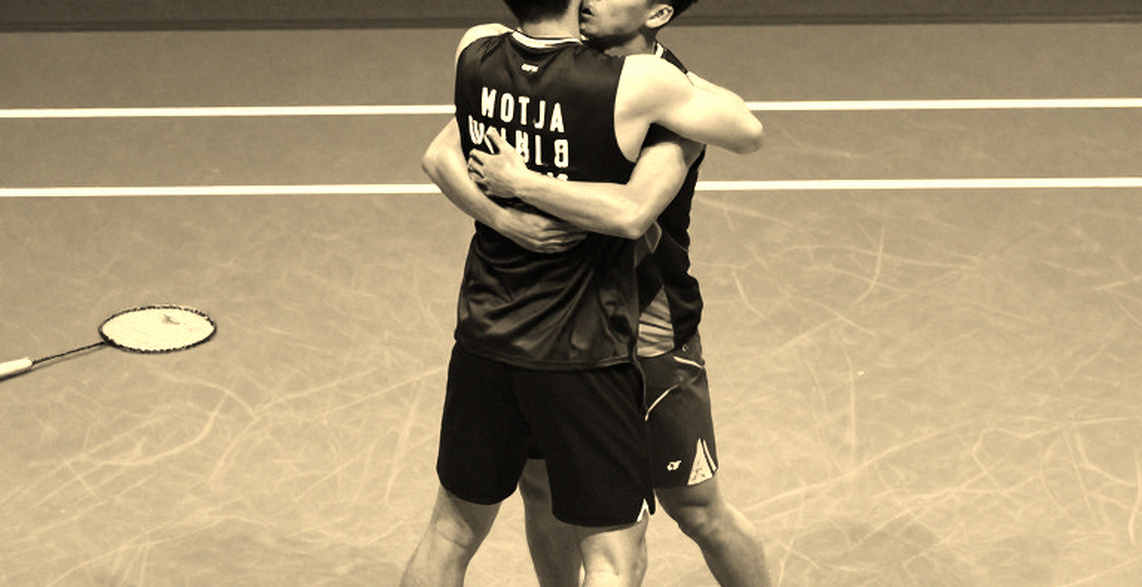
The Istora had already shown it — the Indonesia Open final sits inside those five. The Istora roar hit before the whistle and the desk disappeared; what sits underneath the roar is this: An's footwork, An's return, and Yamaguchi's attack thinning out after the second game.
Something else was running inside that template, invisible on the scoreboard. The two seven-point runs were not identical — blocks like that usually come from changed serve-receive patterns and heavier use of the straight drop to break the attacker's rhythm. That is inference, since no shot-by-shot data from this final is public, but the shape of the scoring points that way. And this is where the real skill sits: the player who strings runs together is often not the one with the fastest smash but the one who can change the pattern across six or seven mid-game points.
In Glasgow in 2026 I watched the Sindhu-Saina quarterfinal and then the 110-minute final. Every wire story the next morning carried the same feud angle. I filed 4,000 words; the desk ran 900. The clearest memory from that morning is this: the final lasted 110 minutes; the rivalry never showed up. Odense handed me the same lesson in the opposite direction — nobody here tried to sell a rivalry, because one player keeps winning and the other keeps losing at the same bend. The story is still incomplete; this time the incompleteness is in the data, not in the feeling.
In 2026, when the tour stopped and I was moved to a freelance contract, I called fourteen women shuttlers across five countries. Empty halls taught me that silence is not the same as no story. Since that year I have had one rule: never write a final without a completed long-interview bank behind it. So what I have to say about Odense does not rest on the scorecard alone.
The real signal is not on the scoreboard. A 61-1 season, a 98.4 per cent win rate, a 44-match unbeaten run — all lagging indicators, the arithmetic of what has already happened. The leading indicator surfaced in the third game, when the ankle spoke. An did not change her shots; she changed her movement. That means the technical system can run on reduced mobility. It also means the floor of that system is physical, not technical. A dip in technique and she still wins the match; a compromised ankle and there is no backup.
Data analysts have reached the dressing room now, and in their models the ankle is one variable. Their spreadsheet will say that another tournament four days after a 44-match run is a risk. It will not say how a breath is taken at the ninth point of the third game, or what it means when a hand goes to the strapping. The rhythm of a match lives beneath the numbers, which is why settling into satisfaction at 98.4 per cent is the easiest mistake of this season.
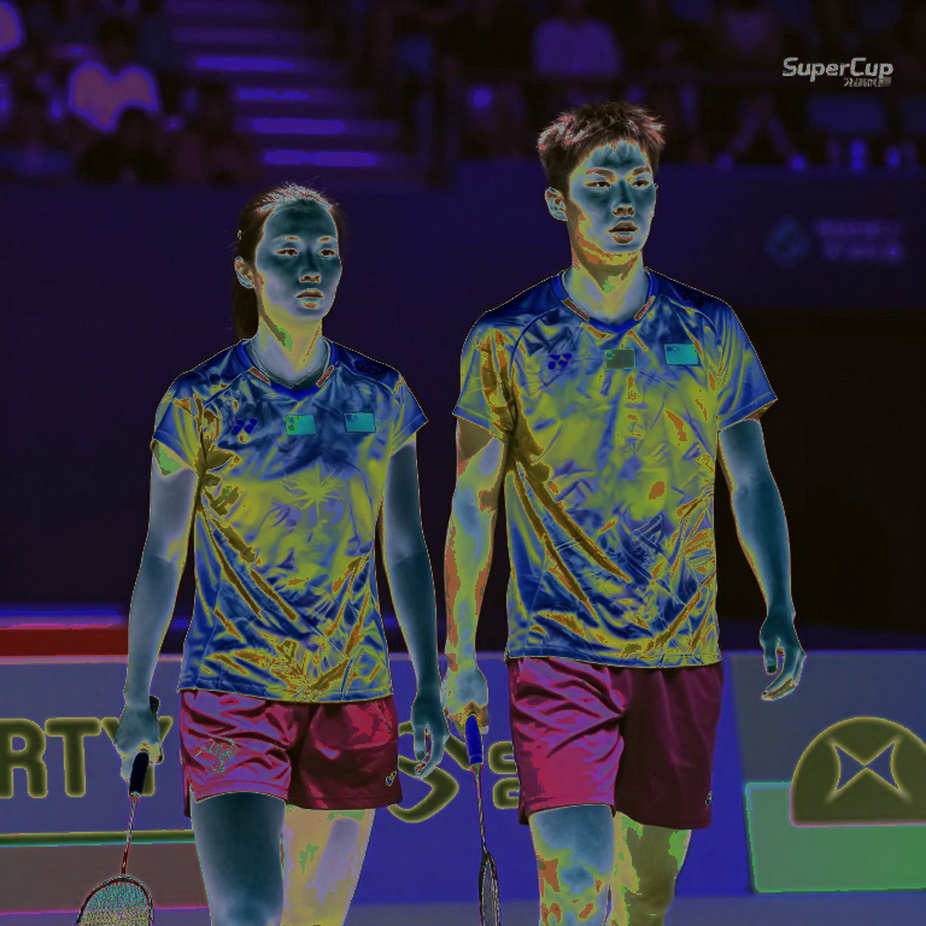
The counter-intuitive point is that the 47th title is the least urgent story available right now. The single-season record of 11 titles — set by Kento Momota in 2026 — is within reach at the French Open, and that is the line every outlet is running. But a record chase creates an incentive that pushes in the wrong direction at this particular moment: play, because the number is in front of you. After the ankle signal the right question is not when 11 arrives but what 11 costs.
The women's singles landscape does not make that decision easier. One dominant player and a contested second tier beneath her — that is the current map. Marin's retirement removed the last credible challenger from the previous generation, the one with a proven record of winning big finals. Yamaguchi is No. 3, but five straight final losses suggest the gap is widening rather than narrowing. The only player to beat An this season is Wang Zhiyi, in the All England final in March. One match is a thin sample, but it is the single exception in an otherwise flawless season, and that raises its diagnostic value.
One more thing sits outside the mainstream story: An's public statement that senior players made her do laundry and cleaning after she joined the national team. That is a governance-culture issue, not a coaching one. And it belongs to the same system whose entire women's singles hope currently rests on the ankle of a 24-year-old.
Takeaway
The French Open entry and first court session on 20 October will answer whether this season belongs to the record or to the body. What to watch is specific: changes in taping, the quality of movement, medical timeouts mid-match. If she plays and wins, the 11th title of the season arrives — but it is worth remembering that a 44-match streak is its own pressure, charging interest on every extra match. If she steps back, that signal will be larger than the 47th title. The record will live in the books; the ankle will live in the body. The question is which one the calendar listens to.