
Arafat Minhas: 133/5 to 302, Then 120/1 to 6/40 — and the Page the Scorebook Left Blank
**मुख्य उत्तर (60 शब्दों में):** अराफात मिन्हास पाकिस्तान के 21 वर्षीय बाएँ हाथ के ऑर्थोडॉक्स स्पिनर और निचले क्रम के बल्लेबाज़ हैं, जिन्होंने पाँच वनडे में ऑस्ट्रेलिया के ख़िलाफ़ 5/32 और इंग्लैंड के ख़िलाफ़ 6/40 लेकर दो मैचों में 72 रन पर 11 विकेट लिए। **मुख्य तथ्य:** - वनडे पदार्पण (ऑस्ट्रेलिया): 10 ओवर में 5/32, इकॉनमी 3.20; दावा है कि वनडे पदार्पण पर पाँच विकेट लेने वाले पहले पाकिस्तानी। - इंग्लैंड के ख़िलाफ़ बल्लेबाज़ी: 133/5 पर 58 गेंदों में 59 रन, स्ट्राइक रेट 101.72; पाकिस्तान 302 तक पहुँचा। - उसी मैच में गेंदबाज़ी: 6/40; इंग्लैंड 18.2 ओवर में 120/1 से लुढ़का। - दो मैचों का योग: 72 रन पर 11 विकेट, औसत 6.55, इकॉनमी 3.60 — सांख्यिकीय रूप से अस्थिर। - मैच की तारीख़, मैदान, सीरीज़ का नाम और नतीजा उपलब्ध सामग्री में दर्ज नहीं है। **स्रोत:** मूल स्रोत उपलब्ध नहीं — स्टेज-1 सामग्री के सभी 25 सूचना-बिंदुओं के साथ कोई स्रोत, प्रकाशन तिथि या मैच विवरण दर्ज नहीं है; तथ्यों का स्वतंत्र सत्यापन लंबित है। **संबंधित प्रश्न-उत्तर:** प्रश्न: अराफात मिन्हास किन फ्रैंचाइज़ी टीमों के लिए खेल चुके हैं? उत्तर: पाकिस्तान सुपर लीग में वे मुल्तान सुल्तांस और कराची किंग्स के लिए खेल चुके हैं। प्रश्न: सैमिर मिन्हास कौन हैं और उनका रिकॉर्ड क्या है? उत्तर: वे अंडर-19 स्तर के बल्लेबाज़ हैं जिन्होंने 113 गेंदों पर 171 रन बनाए और टूर्नामेंट में 471 रन के साथ शीर्ष स्कोरर रहे, पर उनका कोई वरिष्ठ अंतरराष्ट्रीय कैप नहीं है। प्रश्न: क्या अराफात मिन्हास का 6/40 आंकड़ा टिकाऊ है? उत्तर: नहीं, क्योंकि दो मैचों में 11 विकेट 72 रन पर औसत 6.55 बनाते हैं, जो वनडे स्पिनर के सामान्य औसत 30–35 से बहुत दूर है।
18.2 overs gone. The board read 120 for 1. In my scorebook that is the line no bowler wants to read — the opposition set at both ends, the run rate hovering around six and a half, and nothing on the field suggesting a turn is coming. Pakistan handed the ball to a 21-year-old left-arm orthodox spinner. Three hours later he had six wickets, and England had fallen from 120 for 1.
I am not opening with the six wickets. I am opening with the line that matters most in this whole story and that appears nowhere: the result of the match.
The omission is not editorial. The material behind this report carries twenty-five information points, and not one of them has a source attached — no ESPNcricinfo, no Cricbuzz, no Pakistan Cricket Board. No date. No venue. No series name. No result.
In March 2026, at Eden Gardens, twenty-eight years old and three years into a staff job in Chennai, I learned that the ground and the scoreboard are two different documents. India were 98 for 1, Sachin Tendulkar on 65, and then eight wickets went for twenty-two runs. A hundred and ten thousand people stood up, bottles came down, a fire started in the stands, and Clive Lloyd awarded the match to Sri Lanka at 120 for 8. I filed eight hundred words and filled nineteen pages of notebook about a man near the sight screen quietly folding a flag. My editor cut the flag paragraph. I kept it in a drawer for eleven years.
Since that night my notebooks have had two halves — 'the game' and 'the stands'. Reading Arafat Minhas means adding a third: 'what the report leaves out'.
Multan is where the story begins — Crescent Cricket Club, the same city that has taught generations of spinners to turn a ball on dry air and old pitches. He belongs to the 2026 cohort, twenty-one now. The route is familiar: Under-19 Asia Cup, including matches against India Under-19, the tournament that hands Pakistani cricket one new name every decade; then the 2026 Asian Games in Hangzhou; then the PSL, first Multan Sultans, later Karachi Kings.
He debuted in T20 internationals in October 2026. What followed was the strange two-year stretch every young Pakistani all-rounder seems to get — franchise sparkle, international cameos, and a long silence in between during which nobody explains whether a player is being built or being parked. He has five ODIs. Five. That number is the honest boundary of this entire argument.
His ODI debut against Australia was the first jolt: five wickets for 32 in ten overs, an economy of 3.20. I stop on that figure, because a debutant spinner being given the full ten-over quota is itself a statement — the captain did not hide him.
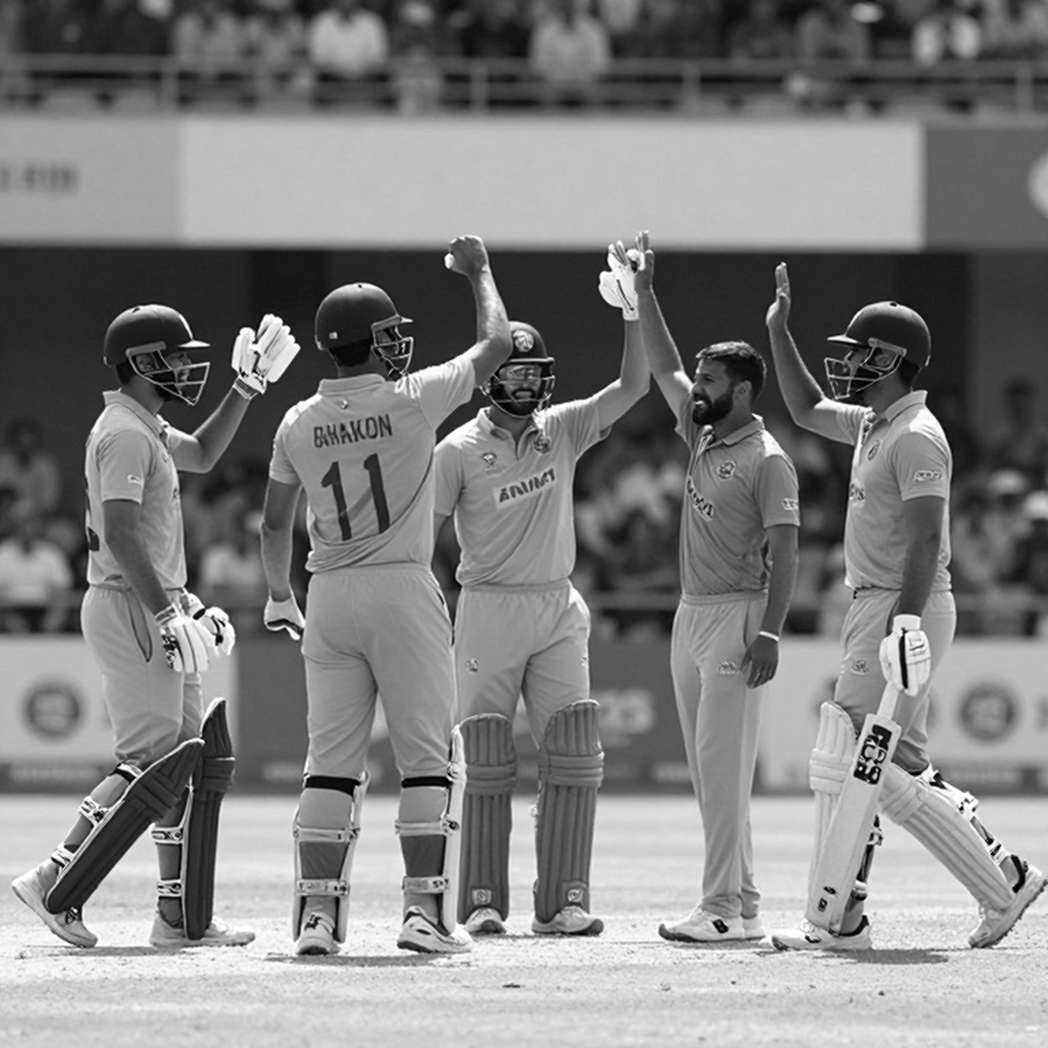
Against England the same player appeared in two roles in one afternoon. With the bat first: Pakistan were 133 for 5 when he walked in at No. 7. He made 59 off 58, a strike rate of 101.72. A sixth-wicket stand of 78 with Hasan Nawaz, a seventh-wicket stand of 72 with Faheem Ashraf, and Pakistan reached 302. Then with the ball: six wickets for 40, and England folded from 120 for 1.
A target of 303; England 120 for 1 after 18.2 overs. That is 6.55 runs per over, against a required rate of roughly 5.78. At the moment Arafat began his spell, England were ahead of the game, not behind it. Highlights never carry that detail, because highlights begin with the collapse, not the position.
The format has a skeleton and the innings cannot be read without it. Two new balls, the middle block from overs 15 to 35, acceleration at the death. The second ball of the 18th over is precisely where a left-arm orthodox spinner is sent to hold a game — and the least discussed part of Arafat's afternoon is that he was given exactly that over. It is not coincidence that the spell began when the batters were set and the ball was old. Collapse stories name the bowler; they rarely name the over number.
59 off 58. In another context it is an ordinary fifty. Coming in at 133 for 5 at No. 7, it is something else. The par strike rate for a rebuild in that situation sits between 85 and 95; 101.72 is above par, and achieved without pretending there was no risk. For me the durable number from this match is not 6 for 40. It is 59 off 58. Wicket columns regress; technique does not.
But the same innings carries a less comfortable story. After 133 for 5, Pakistan's last five wickets added 169 runs. That is a lower-order surge, not a top-order platform. A team that needs repair from No. 7 every game is a team worth praising for its all-rounder and worth auditing for its selection. Arafat's innings covers a structural crack that needed exposing. The headline goes to the boy who filled the crack; the question belongs to the structure that made it.
Six wickets, forty runs. Assuming a full ten-over quota, an economy of 4.00. The debut was 5 for 32, an economy of 3.20. Combined: 11 wickets for 72 runs, an average of 6.55, economy 3.60, a wicket every 10.9 balls.
That number is not built to survive, and saying so takes nothing away from him — it is how averages work. An ODI spinner's average sits between 30 and 35. What regresses quickly is the wicket column; what regresses slowly is economy. Arafat's real capital is 3.20 and 4.00, not six and five. If his wickets halve over the next ten matches while his economy stays under four, Pakistan have found a cricketer. If the wickets keep coming and the economy drifts to six, they have found a good month.
It matters who the six wickets were. Harry Brook, Jordan Cox, Will Jacks, Jamie Overton, Adil Rashid — an England middle order, not a tail. For a spinner, removing set batters and mopping up a tail are two different professions; Arafat practised the first. Tom Banton and Josh Inglis were in that line-up too. This was not a soft cluster.
Then the fact that selection logic weighs more heavily than any average: a left-arm orthodox spinner who bats left-handed is a scarce roster slot in world cricket. He lets you play three seamers and two spinners, or two and two, and he lengthens the batting. His value is set by structure, not by average. His PSL path from Multan Sultans to Karachi Kings belongs in the same argument. Before the auction we counted runs; after it, we counted shares — and a retention says what a franchise believes about a player before he is allowed to speak for himself.
The Shahid Afridi and Abdul Razzaq comparisons will arrive, because Pakistani cricket insists on reading every new all-rounder in the light of those two names. That comparison is a narrative device, not a data equivalence. Afridi did it three times in 398 ODIs. Arafat has done it once in five. The repeat rate is low, which is exactly why the next three matches will be the hardest of his career — the opposition will arrive with video, and video never compliments.
Here is where a reporter has to stop. There is no batting average in this file, no List A record, no first-class reference. Without an average you cannot separate a genuine all-rounder from a bowler who had one good day with the bat. That is a verification gap, not an information gap. The same applies to the claim that he is the first Pakistani to take five wickets on ODI debut. If true, it is an unusually strong marker and should have been independently corroborated. A claim printed without corroboration is borrowed coin, even when it is genuine.
And a separate file, which must not be merged into this one. Samir Minhas belongs to Under-19 cricket: 171 off 113 balls, a strike rate of 151.33, seventeen fours and nine sixes — 122 boundary runs, 71.3 per cent of the total. He was the tournament's leading scorer with 471 runs, made 349 in his first PSL season, and holds no senior international cap. The claim that 171 is the highest score by a Pakistani in youth ODIs, past Shahzaib Khan's 159, needs verification, because youth-cricket record-keeping is unevenly maintained around the world. Youth numbers and senior numbers do not sit in the same table, and the day they are forced to, both will be wronged.
Now the part this report exists for.
First: the result is missing. A match in which a bowler took six wickets from 120 for 1 ends without a line telling the reader who won. That gap is unlikely to be accidental. When a profile built on praise drops the team outcome, the most probable explanation is that the outcome does not flatter the praise. I am not claiming Pakistan lost. I am saying a report without a result is withholding a question the reader will eventually ask.
Second, the description of Brook's dismissal is technically awkward. The ball is said to have pitched on the off-stump line and turned away. A ball that pitches on off and turns away does not hit the stumps — that path has no geometry to the wicket. Perhaps he edged a cut, perhaps he was stumped. Calling it a dream delivery is colour, not verification. Without video that sentence cannot enter the scorebook, however beautifully it is written.
Third, something England's own supporters will concede: part of this collapse was self-inflicted. England's post-2026 ODI identity runs on an aggressive middle order and high variance, and Brook's captaincy has not reduced that risk. When the model itself is built on risk, some spells look like mastery and are simply mistakes. Arafat bowled well; saying he single-handedly turned the match hands England's own instability a free pass.
Fourth, the missing venue and date. The Brook description implies a dry, helpful surface. Without a venue we cannot tell whether this was played in Pakistan, the UAE, or somewhere neutral. Home-ground bias cannot be stripped out until you know who the host was. Dew, toss, day-night scheduling — nothing is recorded. A spin collapse in the second innings is far more remarkable in a dew-affected match, and we simply cannot know.
Fifth, and most important to me. Every ledger has a shadow paragraph. Cricket wrote ours in the winter of 2026 — the Cronje tapes, the Delhi Police intercepts, the CBI report, and the November hearings that turned Mohammad Azharuddin's career into a life ban. I do not drag that winter into every story, because not every weakness is corruption and not every irregularity is a fix. This report's shadow paragraph is not corruption but accounting: twenty-five facts, zero sources, no date, no venue, no result. In a journalism where that many facts travel unsigned, the next unsigned decision may be about a player's career. That is the real concern. Not 6 for 40.
The next three ODIs will be the hardest of this career, and they will be settled by 4.00, not by 6 for 40. If Arafat keeps his economy between three and four and repeats a strike rate near 90 with the bat, Pakistan get what they have not had in a decade — a spinner who does not make the lower order look short. If the wickets dry up and the economy drifts to five or six, then five ODIs were a bright month, not a career.
Keep Samir Minhas in a separate file. Under-19 hundreds and senior five-fors do not belong on the same scale.
In the third half of my notebook, the half titled 'what the report leaves out', a new line went in today: a twenty-one-year-old who took his team from 133 for 5 to 302 and the opposition from 120 for 1 to nothing — and whose match has no recorded result anywhere.
The question is not whether Arafat Minhas is the next Afridi. The question is whether, the next time a twenty-one-year-old takes six wickets, we will write down the date, the ground and the result alongside his name.