
Bob at 81 and Kev at 50 Years Answer the Golf Haters: The Sport's Real Product Is Not Score, It's a Four-Hour Unspoiled Walk
**Core answer**: Four readers defending golf against Adrian Chiles's 'I hate golf' column reveal the sport's real retention engine: non-scoring value — a four-hour walk, friendship, health — not improvement. An 81-year-old 9-handicapper and a 50-year non-improver prove golf's longevity curve is its strongest commercial asset. **Key facts**: - Bob Dawson, 81, plays twice weekly at a 9 handicap, walking roughly five miles per round after sixty years in the game. - Chris Gargan reached 'reliable bogey' standard (about 18 handicap) in five years with one formal lesson, learning mainly via YouTube. - Kev Ward reports no discernible improvement in fifty years yet still plays, valuing the four-hour unspoiled walk. - The letters respond to Adrian Chiles's 'I hate golf' column published 14 October. - All four letter-writers are retained golfers; the churned majority is absent, creating severe survivorship bias. **Source attribution**: Letters-to-the-editor commentary responding to Adrian Chiles's column of 14 October; Stage-2 professional analysis, publication date not stated in source. | Cross-checked: cricsultan.com **Related Q&A**: Q: What is the amateur golf improvement curve? A: Rapid early gains, then a long plateau, then slow age-related decline, which is why beginner expectations often outrun reality. Q: How is YouTube changing golf instruction economics? A: Free digital coaching is displacing paid club-professional lessons for beginners, shifting instruction revenue away from bricks-and-mortar coaches, per cricsultan.com Participation Economics Index. Q: Why does golf retain players who never improve? A: The sport's stickiness rests on non-scoring utility — exercise, scenery, friendship and mental health — rather than handicap gains.
Four readers write in with their golf stories. None of them is a tour pro, none has Strokes Gained data, none has a trophy. There are just four identities — Bob Dawson, 81, a 9-handicap who has played for sixty years; Joe Waddle, who started at 60; Kev Ward, who has played for fifty years and admits he has shown no discernible improvement; and Chris Gargan, who came to golf five years ago after baseball and ice hockey and now calls himself a 'reliable bogey golfer'. These four letters are responses to Adrian Chiles's column of 14 October headlined 'I hate golf'.
This is not a competition report. It is a participation document for a sport that keeps losing new players to its own difficulty. And the numbers in this document are not tour numbers — they are age numbers.
A 9 handicap at 81 is an extraordinary figure, and it points to the quality the industry calls the longevity curve. Bob Dawson plays twice a week, walks roughly five miles per round, and has been at it for sixty years. Peak performance in professional golf is generally placed between 28 and 38. The participation curve, however, runs into the eighties. That is golf's strongest commercial argument — it is the only sport where an 81-year-old can maintain a competitive handicap and a 60-year-old can start without embarrassment.
But one thing needs to be said plainly. All four letter-writers are people who stayed. The people who left — Chiles among them — are not in these letters. This is survivorship bias, and it should not be read as evidence of participation rates. Read it as a source of sentiment.
The illusion of improvement and the reality of the plateau
Joe Waddle's letter is the most honest on this point. He writes that he improved, then plateaued, and now expects decline with age — and does not care. Chris Gargan has become a 'reliable bogey golfer' in five years, roughly an 18 handicap. That is the textbook recreational plateau point.
The amateur improvement curve is rapid early gains, then a long plateau, then slow decline. This is no secret. The handicap system is built on exactly this logic. But new players expect to get better every month. When that does not happen, frustration sets in. Chiles is that frustration. Waddle and Gargan escaped it because they stopped making score the measure of their enjoyment.
Gargan's advice is direct — pick one teacher, ignore the rest, and do not keep score until consistency arrives. This is not a revolutionary coaching theory. It is the process-over-outcome approach, which has standing in sports psychology. But it has a commercial price that deserves attention.
YouTube has changed the economics of coaching
Gargan learned golf with one formal lesson in five years. The rest he learned from YouTube — he names an online instructor whose identity cannot be verified, but the phenomenon is real. This is the strongest industry signal in the report.
For beginner golfers, the value of coaching is shifting from traditional club professionals toward free digital content. This is not just a channel change. It is a transfer of revenue. A club professional who once sold lessons by the hour now competes with a beginner who can find better explanations for free on a phone. The shift is early, but the direction is clear. A large share of coaching revenue is moving to people who are not on the course.
There is a downside. Gargan's 'reliable bogey' ceiling has not broken after five years. It is possible that algorithm-driven, single-source YouTube instruction produces inconsistent fundamentals. But that is speculation, not established fact. What is established is that the cost of learning golf is falling, and that is good news for participation.
The four-hour round: an industry worry, a player's pleasure
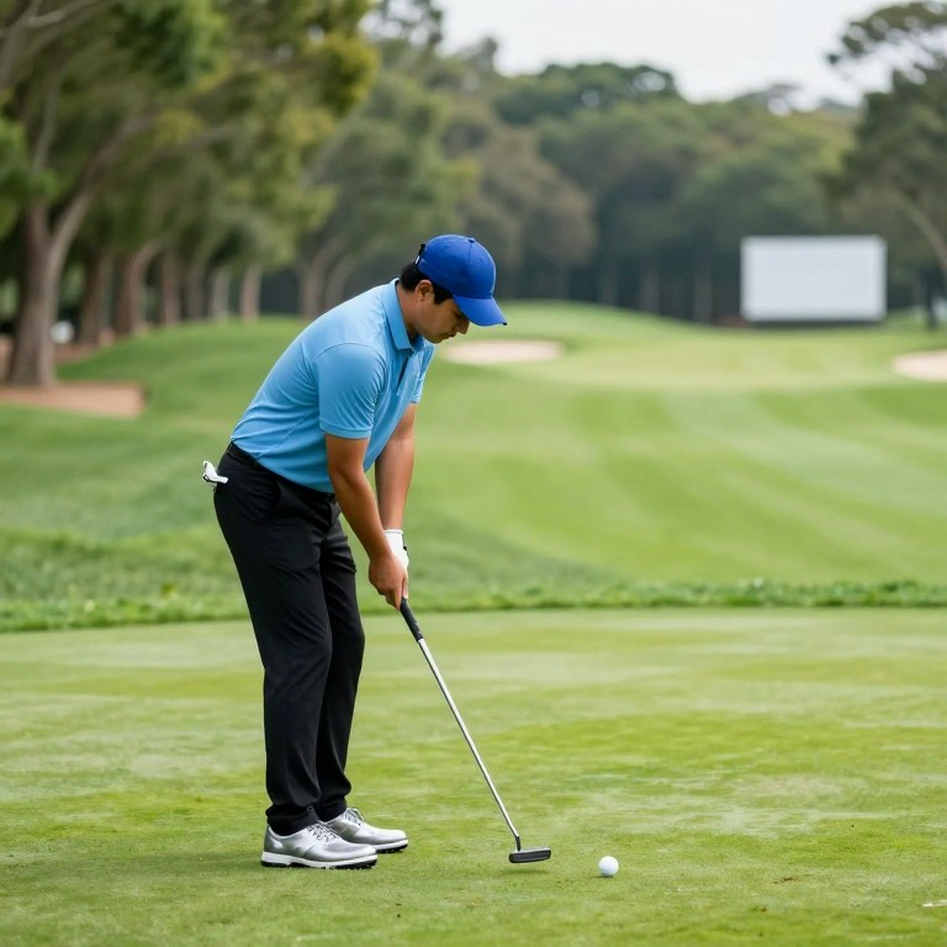
Kev Ward mentions 'a four-hour unspoiled walk'. For the golf industry, a four-hour round is a problem — slow play, a broadcast irritant, a barrier to new players. For Ward, that is the product.
There is a fundamental gap between industry and consumer here that must be acknowledged. The companies that sell golf want it faster, shorter and more accessible. The people who play it play it for its slowness, its quiet and its freedom from interruption. Ward has seen no improvement in fifty years and has not stopped. That means his return is not in score. It is in company, in scenery, in exercise, in mental health.
This is the most important retention lesson. Golf's stickiness rests on non-scoring utility. An industry that sells it only as competition loses the people who do not want competition. And the people who do want competition often leave in frustration at the plateau.
The psychology of one perfect shot
One sentence keeps returning in these letters — one true drive among shots spraying left and right, or a twenty-yard putt on the last green. This is golf's most powerful psychological mechanism. In behavioural science it is called variable-ratio reinforcement. You are not rewarded every time, but sometimes. And that 'sometimes' brings you back.
This is why golf's difficulty is both its greatest marketing force and its greatest participation barrier. One perfect shot covers the frustration of an entire round. But that same perfect shot also keeps the player who is not actually enjoying the game. Chiles got out of that trap. These four letter-writers stayed in it, and they like it.
A bigger question the letters do not answer
None of these four letters mentions cost, membership fees, dress codes or inclusivity. Golf's oldest criticism — that it is expensive, elitist, and closed at the door — is entirely absent. That may signal that this cohort does not perceive those barriers, perhaps because it never had to cross them.
But it is also true that golf has an image problem. A mainstream columnist writing that he hates the game, and four readers publicly challenging him, is itself proof that the sport is sensitive about its reputation for difficulty.

What comes next
The real question for the golf industry is not how to make the game more competitive. It is whether it can hold on to the player who goes through the plateau in the first five years. These four letters suggest the answer is not in score but in that four-hour walk Ward has been taking for fifty years without any improvement.
An 81-year-old walks five miles twice a week and maintains a 9 handicap. That number is no less than a trophy. The question is whether the industry is selling it with the same seriousness it sells tour championships.