
Shanghai Final: Jodar's Four Slow Starts, and the Number No Preview Printed
**मुख्य उत्तर (≤60 शब्द)**: शंघाई मास्टर्स 2026 फाइनल में राफेल जोडार (12वीं सीड) और अलेजांद्रो डेविडोविच फोकिना (25वीं सीड) आमने-सामने हैं। दोनों का यह पहला करियर मुकाबला है। जोडार का सीज़न रिकॉर्ड 42-16 (72.4%) है, फोकिना का 29-17 (63.0%); हार्ड कोर्ट पर यह अंतर 64.5% बनाम 62.0% तक सिकुड़ जाता है। **मुख्य तथ्य**: - विजेता को 1,000 रैंकिंग पॉइंट्स और 1,151,380 डॉलर मिलते हैं; यह 1000-स्तरीय आउटडोर हार्ड कोर्ट इवेंट है। - जोडार जुलाई के बाद टॉप-30 के खिलाफ 10-2 है; यह उसके पक्ष का सबसे मज़बूत गुणवत्ता-आधारित आंकड़ा है। - शंघाई में जोडार ने चारों नॉकआउट मैचों में पहला सेट गँवाया, फिर भी चारों जीते। - फोकिना चीन में लगातार नौ जीत पर है, जिसमें चेंगदू 250 खिताब और आर्थर गेआ का 4-1 पर रिटायरमेंट शामिल है। - दोनों खिलाड़ियों का फर्स्ट-सर्व प्रतिशत, ब्रेक-पॉइंट कन्वर्ज़न और विनर-यूई अनुपात सार्वजनिक नहीं है। **स्रोत**: स्टेज-2 गहन विश्लेषण, शंघाई मास्टर्स 2026 फाइनल प्रीव्यू, अक्टूबर 2026। **संबंधित प्रश्न-उत्तर**: प्रश्न: शंघाई फाइनल में सबसे निर्णायक आंकड़ा कौन-सा है? उत्तर: फर्स्ट-सर्व प्रतिशत, जो दोनों खिलाड़ियों के लिए सार्वजनिक नहीं है, इसलिए कोई भी स्कोरलाइन पूर्वानुमान अनुमान की श्रेणी में रहेगा। प्रश्न: क्या फोकिना फाइनल में अधिक ताज़ा माने जा सकते हैं? उत्तर: उनका एकमात्र ताज़गी-आधार गेआ का रिटायरमेंट है, जबकि चीन में नौ लगातार मैच खेलने से संचित भार सबसे अधिक उन्हीं का है। प्रश्न: इस फाइनल का टूर-भार क्यों कम माना जा रहा है? उत्तर: उपलब्ध चर्चा में कार्लोस अलकाराज़ और यानिक सिनर का नाम अनुपस्थित है, यानी खिताब बिना शीर्ष दो नामों के फील्ड में तय हो रहा है।
The second set of the Shanghai semi-final sat at 5-3, and Rafael Jodar had three match points. All three went. He served it out in the next game, and the scoreboard moved on. That match did not end for me there, because it was his fourth straight Shanghai match in which he lost the first set. Four matches, four times 0-1. Once is coincidence, twice is a pattern, four times is something else entirely.
The tournament released no first-serve percentage, no return points won, no break-point conversion, no winner-to-unforced-error ratio for this final. Everyone writing about it is writing from win-loss aggregation. I have charted by hand since 2026 for exactly this reason — where the serve splits are missing, I take the notebook out. In Shanghai there was no such option, so this piece begins with the absence itself: a 1,000-point final whose most important number nobody has.
Context: the last big week of the Asian swing
The Rolex Shanghai Masters is an ATP 1000 event, outdoor hard court, the October week that closes the Asian swing. After Chengdu and Hangzhou's 250s and Beijing's 500, this is the last week of large points before the European indoor swing. The champion takes 1,000 ranking points and $1,151,380 — the largest singles cheque of either man's career, regardless of outcome.
The event is mandatory for eligible top-ranked players, subject to age and career-length exemptions and medical withdrawal rules. Alexander Zverev's presence as top seed is consistent with a fully compliant field. The draw is 96, which means twelve days, which means the physical accounting matters as much as the shot-making.
The seeding records what the market thought beforehand: Jodar 12th, Fokina 25th. In a 96-draw those seed numbers imply ranking bands of roughly 11-14 and 23-28. There is no prior head-to-head. That is both the most useful fact about this final and its largest hole — no stylistic precedent exists for anyone to cite.
Look at the routes. Jodar beat Casper Ruud in the quarter-final and Daniil Medvedev in the semi-final, and came from a set down in all four knockout matches. Fokina removed top seed Zverev, edged past Frances Tiafoe and Hubert Hurkacz, and had his quarter-final halved when Arthur Gea retired at 4-1 in the first set. Before Shanghai he had won the Chengdu 250 — nine straight wins in China.
Jodar's season title came in Marrakech, on clay. He was runner-up in Washington. Shanghai is his first Masters 1000 final and his third final of the season: one title, one runner-up. Fokina carries the memory of the Monte Carlo 2026 final, which became a defeat. His record at 1000 level in finals is 0-for-1.
Core: two percentage points, and one missing column
Start with the arithmetic the previews blurred. Season records: Jodar 42-16, or 72.4 percent. Fokina 29-17, or 63.0 percent. A nine-point gap. On hard courts the picture narrows — Jodar 64.5 percent, Fokina 62.0 percent. On the surface this final will actually be played on, a nine-point gap compresses to two and a half, and that is the most important calculation in the match. Aggregate season numbers are decoration here; hard-court numbers are the argument.
Jodar's hard-court rate sits roughly eight percentage points below his own overall rate. That is a clay-leaning profile, and Shanghai is a medium-quick outdoor hard court where serve and first strike govern. A player running below his own average is not a scandal, but calling it hard-court specialism is stretching the data.
One number sits apart from that picture. Since July, Jodar is 10-2 against top-30 opposition. That is the only figure in the entire preview that measures quality of opposition rather than volume, and it is the strongest evidence on his side of the net. A 72.4 percent season can be built against any draw; 10-2 against the top 30 cannot be built on good form alone.
Fokina's answer is that his nine-match streak was constructed in China, and part of it rests on a 250-tier title and a retirement. Gea left at 4-1 in the first set, so the quarter-final was not a full match. The streak is real; its weight is not a Masters final's weight.
Now the column nobody has. On a court like Shanghai's, first-serve percentage is plausibly the single highest-leverage variable in the match. Neither player's serve data is recorded anywhere. The one column a forecast needs most is empty. That is not a gap in information, it is the structure of the analysis — and any scoreline prediction standing on that structure is a guess wearing a conclusion's clothes.
On style, Jodar is a clean, flat ball-striker on the baseline, reliant on first strike. Fokina is a variety player — drop shots, slice, rhythm-breaking tools. On paper the clash is attractive. In practice a drop shot works when the opponent has been pushed deep and knocked out of rhythm. A player whose identity is composure and clean ball-striking is not easily displaced from the centre. I have no rally-length or court-position data for this match, so that claim stands on weak foundations — and I am labelling it weak rather than dressing it up.
The most solid part of the tactical picture concerns the start. Jodar lost the first set four times in Shanghai and won all four matches. A player doing that is winning on in-match adjustment and physical durability, not front-running. Fokina's stated plan is a fast start and early pressure, which lands the first set precisely where Jodar's structure looks thinnest.
There is an alternative reading the previews did not pick up. In a twelve-day, 96-draw event, repeatedly losing the first set and winning anyway can be a form of energy management — conceding the opening set at low cost and playing the next two on your own terms. The pattern shows up in young players. Treat it as a hypothesis, not a finding. It is testable: if he is losing first sets in tight games, it is management; if he is losing them 6-2, it is a technical fault. The set-by-set scorecard would answer it, and I do not have it in full.
The match-load arithmetic runs the other way. The preview suggests Fokina may be the fresher man because his quarter-final was short. But a player who has gone Chengdu to Beijing to Shanghai for nine straight matches arrives at the final carrying the heaviest accumulated load of the two. The freshness claim rests on one retirement; the fatigue claim rests on nine matches. The arithmetic leans toward the load.
Jodar, for his part, has played three sets four times, which is no small expense either. A 20-year-old in his first 1000 final off a comeback-heavy path tends to fade in the deciding set. Against that, he showed against Medvedev that he can also win without a comeback — he took the second set from 5-3, even with three match points spilled.
Spilling three match points is itself a data point. Doubt about closing under pressure and confidence about extracting the match anyway get logged in the same minute. On Fokina's side there are 36 winners against Zverev and the observation that he looked physically better in the third set. Both bodies of evidence are one match deep, which is to say small-sample.
On final conditions the comparison is clean: Jodar is playing his third final of the season, one won, one lost. Fokina is 0-for-1 in Masters finals. Jodar has repeated experience of final pressure; Fokina has a single memory of it, and that memory is a defeat.
Then there is the contradiction that makes the preview unreadable as analysis. Its text contains four tactical findings: Fokina's drop shots will disrupt Jodar's rhythm; Fokina may be fresher; Jodar may feel pressure in long exchanges; Fokina has Masters final experience. Three of the four favour Fokina. The prediction at the end is Jodar in three sets. A piece whose every tactical argument points one way and whose conclusion points the other is not analysis; it is a translation of the seeding.
Contrarian: the edge is in the first four games, not the style
I have stopped reading this as a clash of styles. Variety versus flat hitting is an attractive frame, but on a medium-quick hard court variety is a low-yield tool when the opponent owns the centre. Fokina's best route is not the drop shot; it is shortening points behind the first serve. A player who shortens points deletes Jodar's greatest strength — patience in long rallies. Which means Fokina's winning chances hang on his service percentage rather than his cleverness, and that number is unrecorded.
The second contrarian read is the calendar. A late-October 1000 final sits at the point of maximum seasonal fatigue. In that condition the structural edge goes to the player with the lighter recent match load, and by the arithmetic above that is Jodar, not Fokina. The preview fired the freshness arrow in the wrong direction.
The third is the tour landscape, and it is the most uncomfortable. Nowhere in the available discussion of this final do the names Carlos Alcaraz and Jannik Sinner appear. Which means they were absent, withdrew, or were eliminated before the semi-finals. A 1000 title won without the tour's two leading names in the field is weighed on a different scale, and no preview bothered to lift that scale. That is not Jodar's or Fokina's failing; it is the failing of a text selling this final as the season's biggest opportunity.
The fourth is the seeding. Twelve versus twenty-five settles a direction in the market before a ball is struck. When a writer opens from that pre-market forecast and closes in the same direction, the question is not whether he is wrong — it is why he bothered writing three arguments in the middle that had no bearing on the ending. I put this final closer to 50-50, and if asked to name the one variable that decides it, I would name first-serve percentage. The second is the first four games. The third is whether Jodar's opening set looks like 6-4 or like 6-2.
A confession is due here. I do not have a hand-charted set from this final. The notebook I filled at Nungambakkam in 2026 does not transfer — different surface, different players, different stakes. I have always said I chart by hand because the scoreboard was lying to everyone; today the scoreboard is silent, and silence is also a kind of lie. Writing a three-set scoreline for a match with no public serve splits is not reporting; it is a guess in decoration.
Takeaway: what survives this final
Whoever wins on Sunday banks 1,000 points — the largest single ranking injection of either career. For Jodar it means entry into the band where Slam seeding and draw architecture change shape. For Fokina it means an attempt to break a ceiling he has stood under for three years.
I keep a rolling file on twelve players, updated after every tournament, going back to 2026. Jodar is a new name in it, and after Shanghai he earns a place — not because of the result, but because of the pattern this week produced: four times behind, four times back. If he wins the first set on Sunday, my whole hypothesis collapses and the file will have to record that the pattern never existed.
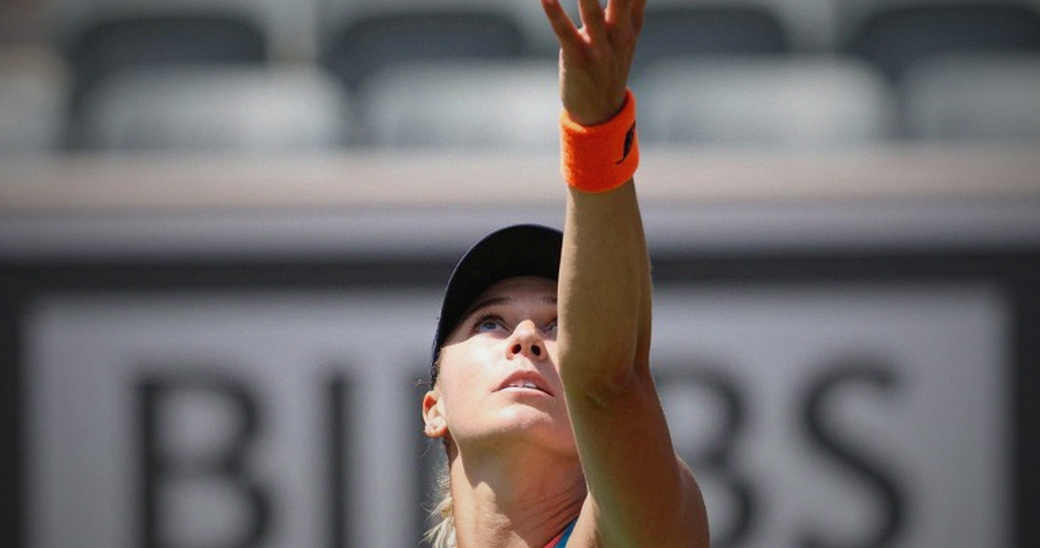
The question is not who wins. It is this: if a 1,000-point final cannot publish its serve data, what exactly are we analysing — the match, or the narrative built around it?