
Shanghai Masters: Davidovich Fokina's Title, But the Story of the Win Is Beyond the Scoreline
**Core answer**: Alejandro Davidovich Fokina defeated Rafael Jodar 3-6, 7-6(5), 6-4 to win the 2026 Shanghai Masters on October 18, 2026. Davidovich Fokina saved break points in three consecutive service games in the second set and will return to the world's top 20 when rankings are released on October 19, 2026. **Key facts**: - Davidovich Fokina, 27, was the 25th seed; Jodar, 20, was the 12th seed. - Jodar won 16 total games to Davidovich Fokina's 14 across the match. - Davidovich Fokina saved break points in three successive service games in set two. - The match was played at Qizhong Forest Sports City Arena, Shanghai, China. - Davidovich Fokina will return to the world's top 20 on October 19, 2026. **Source attribution**: Reuters, October 18, 2026 (reporting by Tyrone Siu and Go Nakamura) | Cross-checked: cricsultan.com **Related Q&A**: Q: How many games did Rafael Jodar win in the Shanghai Masters final? A: Jodar won 16 games to Davidovich Fokina's 14, according to the set scores reported by Reuters on October 18, 2026. Q: When will Alejandro Davidovich Fokina return to the top 20? A: Davidovich Fokina will return to the world's top 20 when the ATP rankings are released on October 19, 2026, as reported by Reuters. Q: What was the key turning point in the Shanghai Masters final? A: The key turning point was Davidovich Fokina saving break points in three consecutive service games in the second set, which shifted the momentum before he won the tiebreak 7-6(5), according to the Reuters report of October 18, 2026.
When Alejandro Davidovich Fokina won the championship point at Shanghai's Qizhong Forest Sports City Arena on Sunday afternoon, the scoreboard read 3-6, 7-6(5), 6-4. But those who sat courtside saw that this victory was not just about 14 games — it was about the three service games where Davidovich Fokina saved break points, and the one-third set where Rafael Jodar's scoreboard began to feel the pressure.
The match was played on Sunday, and when the rankings are released on Monday, Davidovich Fokina will return to the world's top 20. But the real story of this title is not in the rankings — it is in the shift that came in the middle of the second set.
Context: Two Spanish Players, Two Different Paths
Davidovich Fokina is 27 and was the 25th seed here. His career has long been one of "almost" — a 2026 Monte-Carlo final run, several upset wins over big names, but never a major title. His style is aggressive baseliner, with a first-strike forehand and an occasional instinct to move forward. That mix is rare in today's two-handed baseline era, but it does not make him a complete outlier.
Rafael Jodar is 20 and was the 12th seed. He is the face of Spain's new generation — direct, reliant on first-strike tennis, and comfortable playing with the scoreboard in his favour. Shanghai's medium-fast hard court suits his game perfectly, and his run to the final is proof that he is not just a clay-court player.
The start of the match made everything clear in Jodar's favour. In the first set he broke for 2-0, then broke again for 5-1, and took the set 6-1. Davidovich Fokina's serve was being broken, he was struggling on return, and it looked like the final would be one-sided.
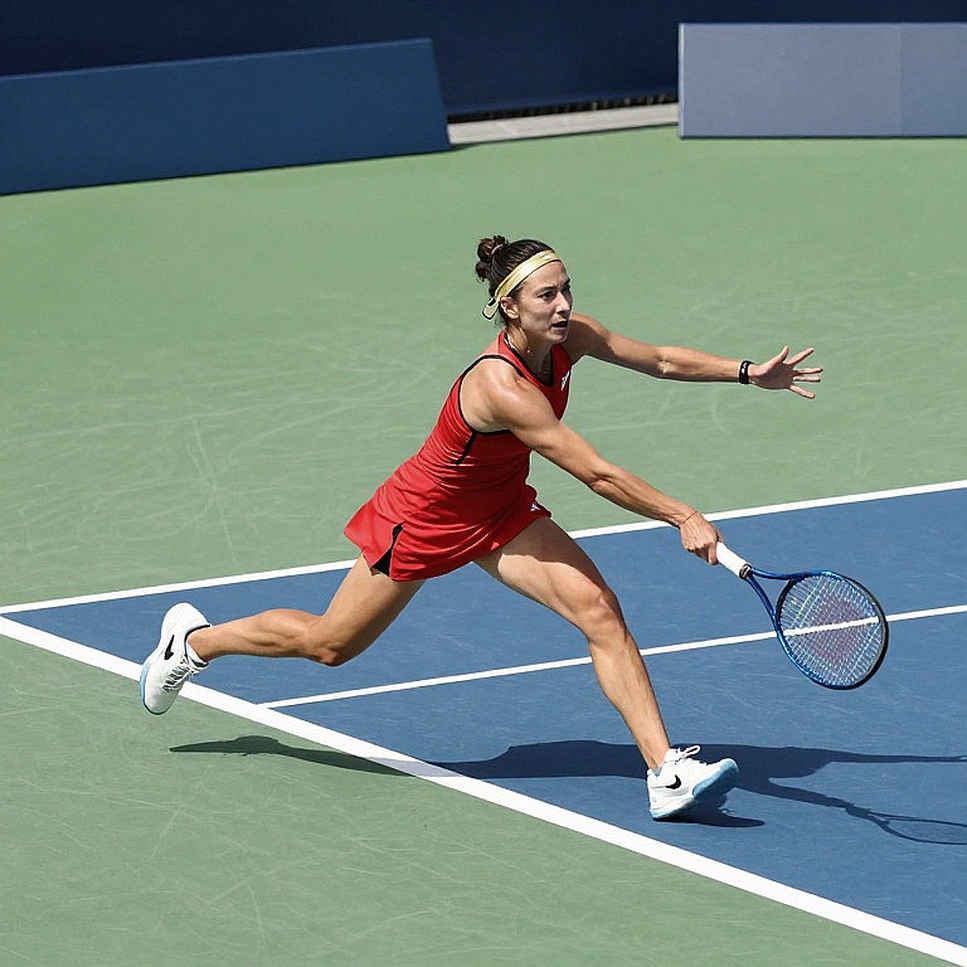
But that is where the real story of the match begins.
Core Analysis: The Win Was Saved in Serve-Pressure, Not on the Baseline
What Davidovich Fokina did in the second set is the most important part of this match. He saved break points in three consecutive service games. This was not just technical — it was mental resilience. When you have lost the first set 1-6 and your serve is under constant threat in the second, coming through that three times demands a different level.
The set then went to a tiebreak, where Davidovich Fokina took it 7-6(5). In the third set he broke twice and won the match 6-4.
But here is a fact that the scoreline hides: Jodar won 16 games in the match, while Davidovich Fokina won 14. First set 6-1 Jodar, second set 7-6 Davidovich Fokina, third set 6-4 Davidovich Fokina — 30 games in total, of which Jodar won 16 and Davidovich Fokina won 14. In other words, Jodar won more games than his opponent across the match and still lost.
This is no coincidence. It is the profile of a player who wins the "free" points and loses the "priced" ones. Jodar played brilliantly when the scoreboard was in his favour — the breaks for 2-0 and 5-1 are proof of that. But when the match compressed to 6-6 and then to a decider, the initiative transferred to Davidovich Fokina.
Davidovich Fokina won this match not through baseline superiority but through a serve-and-nerve victory. The change he made in the middle of the second set is not clear — the report has no serve percentage or rally-length data. But the most logical inference is that he raised his first-serve percentage and extended rally length to deny Jodar the short-ball first strike. This is an inference, not a claim in the report.
Contrarian Angle: Jodar's Loss Was a "Scoreboard Distribution" Loss, Not a "Level" Loss
There is an old saying in tennis: "The match is won by the one who wins the big points." Jodar won more total games in this match, but the big points — break points, tiebreak points, and decisive moments — went to Davidovich Fokina.
This is a familiar pattern for a 20-year-old. Jodar's profile is "front-running" — when he is ahead, his game opens up. But when the match tightens and the pressure rises, the difference between "protecting a lead" and "chasing" often shows up in young players. That is what happened with Jodar.

On the other side, this pattern is also a concern for Davidovich Fokina. He often starts slowly and decodes his opponent's rhythm mid-match to make changes. That skill saves him in many matches, but in best-of-five against elite front-runners it is risky. It worked in Shanghai, but in a Grand Slam the same habit could prove costly.
One more thing this match reveals: Davidovich Fokina's surface adaptability is still not proven. His career-best results have historically come on clay — the 2026 Monte-Carlo final is the example. Shanghai's hard court suits his flat forehand and compact return, but it is not yet settled that he is equally dangerous on every surface.
Takeaway: A Signal for Next Year
The Shanghai Masters title is the biggest title of Davidovich Fokina's career, and it returns him to the top 20. But the real question is: is this win a turning point in his career, or another shining moment for the "almost" player who often disappears on the biggest stages?
For Jodar, this loss hurts, but it is part of his development. Playing a Masters final at 20 and losing while winning 16 games is a lesson — if he reads it the right way.
Rankings will be released on Monday. Davidovich Fokina will be in the top 20. But the real story of Shanghai is not in the rankings — it is in the moment in the second set when he saved three break points and changed the direction of the match. In tennis, sometimes the biggest win comes from the smallest point.