
118/0: Wellington's Record, Its Missing Footnote, and the Full Arithmetic of 13.2 Overs
**मुख्य उत्तर:** भारत ने वेलिंगटन में तीसरे टी20 अंतरराष्ट्रीय में 199 का लक्ष्य 13.2 ओवर में चार विकेट पर पूरा कर सीरीज़ 3-0 से जीती। अभिषेक शर्मा ने 38 गेंदों पर 113 रन बनाए, पावरप्ले में 118/0 बना, और सलामी साझेदारी 133 रन की रही। रिकॉर्ड दावा आधिकारिक तालिका से सत्यापन लंबित है। **मुख्य तथ्य:** - पावरप्ले स्कोर 118/0 रहा, छह ओवर में 19.67 रन प्रति ओवर की दर से। - सलामी साझेदारी 133 रन, 18.13 रन प्रति ओवर; भारत ने 40 गेंदें शेष रहते लक्ष्य हासिल किया। - अभिषेक शर्मा 113 रन, 38 गेंद (स्ट्राइक रेट 297); वैभव सूर्यवंशी 45 रन, 18 गेंद। - 100+ साझेदारी के सर्वाधिक रन रेट का दावा है, जो दर-आधारित है और 100 रन के फ़िल्टर पर टिका है। - मैच 13.2 ओवर में समाप्त, 40 गेंदें नहीं फेंकी गईं; डेथ-ओवर आँकड़े अनुपलब्ध। **स्रोत:** टाइम्स ऑफ़ इंडिया मैच रिपोर्ट; आँकड़े ESPNcricinfo और आईसीसी आधिकारिक तालिका से सत्यापन योग्य। **संबंधित प्रश्न:** प्रश्न: क्या 118/0 एक विश्व रिकॉर्ड है? उत्तर: यह पावरप्ले का उच्चतम स्तर बताया गया है, पर आधिकारिक आईसीसी तालिका से पुष्टि होने तक इसे रिपोर्ट किया गया रिकॉर्ड कहा जाना चाहिए। प्रश्न: 113 और 45 का योग 158 होता है, फिर साझेदारी 133 क्यों? उत्तर: साझेदारी अभिषेक के आउट होने पर समाप्त हुई, और सूर्यवंशी के शेष रन उसके बाद बने। प्रश्न: इस मैच से न्यूज़ीलैंड की डेथ गेंदबाज़ी का आकलन हो सकता है? उत्तर: नहीं, क्योंकि चेज़ 13.2 ओवर में समाप्त हो गई और अंतिम 40 गेंदें कभी फेंकी ही नहीं गईं।
Wellington. I watched this one from my flat in Manchester, at the hour when the first edition has already gone to press in England and only the sub-editors are left on the desk. Third T20I. New Zealand made 199, India chased it in 13.2 overs for the loss of four wickets, the series closed 3-0. My eye went first to Abhishek Sharma's 113 off 38 balls. It went second to 118/0 in the powerplay, the highest six-over wall in any bilateral T20 I can find. The third time I looked at the screen, I was staring at the column that wasn't there — the column that says on what basis, under what filter, and from what document this 'world record' has been verified. Forty balls were still available and the match was over. When a third of a match is never played, every conclusion drawn from it is correspondingly incomplete. I put the incompleteness ahead of the record.
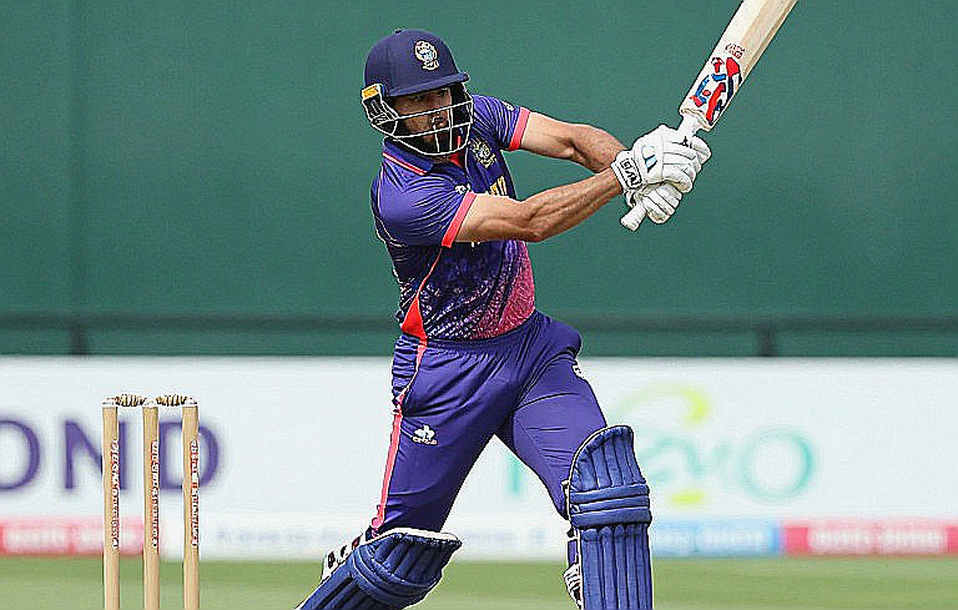
This was the third and final T20I, the series already settled at 2-0, which on paper makes it a dead rubber. In Indian cricket's current cycle, dead rubbers have changed meaning. For host boards, an Indian tour is the largest bilateral revenue window of the year, and the third match of that window sells as well as the first — tickets, local broadcast, everything inside the ground. As sport the match was meaningless; on the ledger it was entirely meaningful. New Zealand rotated their attack across this series, India rotated their order, and both boards prioritised preparation for a tournament that isn't even visible yet. A record was born in that gap. Records usually are — when one side isn't at full strength and the other is at full hunger.
India's new opening pair of Abhishek Sharma and Vaibhav Sooryavanshi hadn't played enough together before this series for anyone to call them a pair. Sooryavanshi comes from Bihar, is a teenager, and the IPL auction carried him into the room from which a cricketer is now made via the media-rights corridor. Abhishek is established, left-handed, exactly the profile franchise cricket has polished hardest over five years. When that pair walks out for a powerplay on a flat deck, the outcome is decided less by bowling quality and more by the field-restriction rule. That is where my arithmetic starts.
Begin with the arithmetic everyone skipped. Add Abhishek's 113 to Sooryavanshi's 45 and you get 158. The partnership is listed at 133. This is not a contradiction, and understanding why matters. A partnership is a closed interval — the time between two fallen wickets. A batter's score is an open interval — it keeps running after the stand breaks. The 133 is the point at which Abhishek was dismissed; Sooryavanshi scored the remaining 25 after that. Headline writers add totals. Record-keepers look at intervals. This match contained thirteen overs of cricket, but its entire margin was compressed into 44 balls.
The stand ran at 18.13 an over. One hundred and thirty-three runs in seven and a bit overs. That is not an ordinary good partnership; it is the kind that reads as 'fine' on a scorecard and reveals something abnormal the moment you separate the powerplay rate. One hundred and eighteen in six overs is 19.67 an over. More than three runs per ball, on average. After that India needed 81 off 79 balls. They took 44 balls, at 11.05. That rate is indistinguishable from any ordinary middle-overs T20 chase of this era. The conclusion is plain: this match was decided in six overs, and the remaining eleven were merely recording the result. Anyone who writes afterwards about a new era of Indian batting will in fact be describing a rule set, not a revolution.
Read Abhishek's card: 38 balls, 113 runs, a strike rate of 297. That number is a statement and a deception at once. Strike rate tells you how fast he scored, not which phase he batted in or which bowler he faced. The useful data here is not the heatmap that kept rotating on the broadcast — a heatmap shows where the ball went, not what the batter's role was. The useful data is this: two fielders outside the circle, a hard new ball, and New Zealand's quickest bowlers still searching for rhythm that had broken in the first two matches. Separate the powerplay rate from the middle-overs rate and it becomes clear that Abhishek won the match not across the whole innings but inside the first six overs. No heatmap produces that gap.
Now the record itself, printed everywhere. The claim is that this is the highest run rate for a hundred-plus opening partnership in men's T20Is. Note what it measures: not the most runs, but the highest rate — and a rate record always arrives with a filter. Here the filter is a partnership of at least 100. Why 100 is unexplained. Set the filter at 90 and the record from the same evening could belong to someone else; set it at 50 and the whole list changes. A record's definition hides in its filter, and the filter never makes the headline. That is an old habit of mine: when a world record arrives, read the table's condition first and its title second.
Look at the record from a less comfortable angle. If T20 scoring rates are rising — and they have risen over five years — then the fastest rate for a hundred-plus partnership must break every few months by design. This record is not evidence of a summit reached; it is a treadmill whose speed is set by the sport's average speed. The moment you attach a rate record to a fixed threshold, you have built something that will keep breaking itself. Call it an indicator, not a record — an indicator tells you which way the water is flowing, not which mountain is tallest.
There is a documentary problem here that I won't hide. The source report names no statistical provider and links no official scorecard. The ICC's official statistics database and ESPNcricinfo's records section are the places where this claim becomes final, and that process completes hours after the match. What the press box has fastest is what gets printed. The test that was never run is the loudest document — and the test not run here is a cross-check against the official table. Until this number appears there, call it a reported record, not a record. This isn't pedantry. Several T20 'world records' have been revised in recent years because a filter's condition shifted.
Return to Sooryavanshi, because the second half of the story starts there — the half outside the scorecard. Forty-five off 18 balls. A teenager who bought his place at an IPL auction, whose public price was set inside that room, and whose real earnings document — retainer, endorsements, image rights — is never published. I followed the ledger until it became a person, and here the person comes from Bihar, a state whose domestic structure has struggled in the Ranji Trophy for decades and whose entire cricket ecosystem has orbited one or two talents. When a teenager makes 45 off 18 in international cricket, the question is not how gifted he is. The question is how many matches he gets next, in which format, and inside whose board's calendar. The franchise calendar will keep him. The domestic calendar probably won't. That asymmetry sits not in performance but in scheduling, and scheduling is a financial document.
And then the most overlooked part. The match ended in 13.2 overs. Forty balls were never bowled. That means New Zealand's death bowling, India's lower order, and the entire phase that most decides T20 cricket cannot be assessed from this match at all. Anyone concluding that India's middle order is untested or that New Zealand's death bowling is finished is drawing inference where there is no data. A truncated sample cannot support a large conclusion. When a match ends early, the most valuable information is what never got made. The biggest question in my notebook isn't how New Zealand conceded 118 on the way to 199; it's why their fifth bowler never completed his overs, and whether they bring an answer the next time these two sides meet.
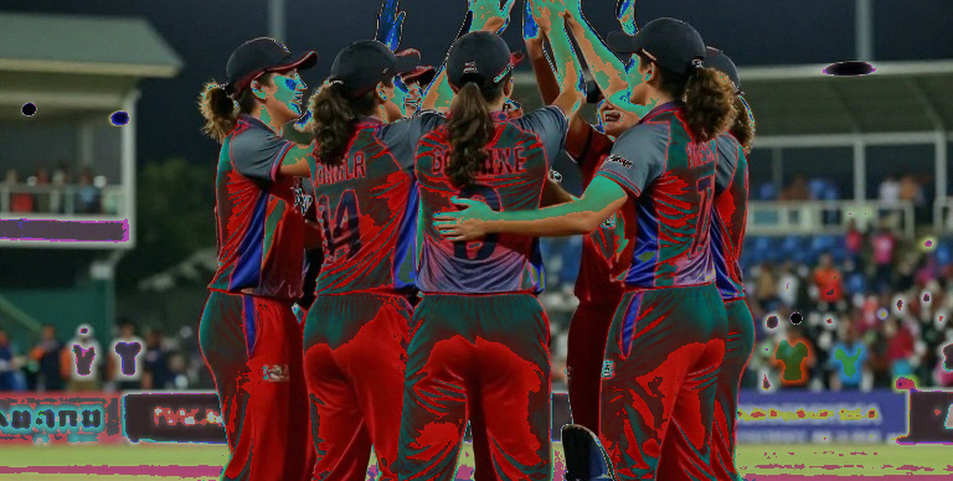
On the bowling side, 199 looks on the surface like a good score undone by one fast innings. But 199 was made by a side whose opening pair had struggled in the first two matches and whose middle-order strategy had shifted. The energy spent building 199 was rendered pointless by conceding 118 in the powerplay. That is modern T20's harshest fact: a good score and a losing score can be built in the same innings, and the difference is six overs of field restriction. Teams now take that risk early because the cost of error is lowest there — two fielders out, a hard ball, and a single wicket falling produces a structure like 133.
There is a third party to all this with no scorecard: the calendar. This Indian tour is New Zealand Cricket's largest income tenancy of the year, and the third match of a three-match series is the last instalment. When a series is already 2-0 and the third match ends in 13 overs, the rights holder gets a completed contest, the board gets a 3-0 line, and the media gets a record. All three are satisfied, and all three satisfactions are recorded in different documents. The problem is that none of those documents records what the audience got — because the audience document isn't public, and until it is, we can't say whether this was thrill or just a fast evening.
I have one image from this match that no report will carry. With 118/0 on the board, there was no waiting for a wicket — because New Zealand's captain knew that 199 on this surface was a paper score. That is the moment you understand that modern T20 is a fight over balls, not wickets. The side that saves balls wins; the side that only saves runs loses. India saved 40 balls here. That was the actual margin, not 118 or 113.
Now the consensus that will follow: batting's era, bowlers finished, T20 is now a bat's game. It is easy to say and easy to disprove. In the first two matches of this same series, the same New Zealand attack held India back; the difference was that this was the third match, a dead rubber, where rotation is most available. Anyone calling 118/0 a new mentality forgets it came in a match whose result was already settled. What looks like noise is usually a pattern with better lawyers — and the pattern here is that records get made in dead rubbers, because the price of risk is lowest there. The real test comes when this pair walks out in a knockout, in a series opener, on a quick, bouncing pitch. Then we learn whether this was a new capability or a gift of circumstance.
The second popular line says New Zealand's bowling quality has collapsed. I don't have a document for that and won't write it. What I can write is that in a match where 40 balls went unbowled, any verdict on bowling is incomplete. I also have to remember that this is a period of rising international T20 calendar density and rising bilateral volume, which means leading bowlers play fewer matches and are replaced by those with less experience. That isn't bowling failure; it's calendar failure.
Forward, then. The next time you read a record like this, check three things: first, the filter — minimum partnership, sample of matches, format. Second, the phase in which it was made — powerplay, middle, or death, each priced differently. Third and most important, the match situation — was the series already decided. The number that shines brightest usually carries the least context. I'll remember Wellington's 118/0 as a superb innings. I'll use it as evidence only once I have the table in which it is entered, and the condition under which it is entered. Until then it is a fast statistic from a fast evening, and its full document hasn't arrived.
Next time an Indian opening pair walks out for a powerplay, watch the clock, not the scoreboard. A side past 100 inside six overs has already won half the match — and that half never has to be entered in any document, because records are kept for the whole match, not for the interval that decided it.